Ashwagandha for Testosterone: The Dose and Timeline the Research Actually Uses
Quick Answer: How Much Ashwagandha for Testosterone, and How Long?
Studies on ashwagandha and testosterone typically use 300 to 600 mg a day of a standardized root extract, often split as 300 mg twice daily, and measure results over 8 to 12 weeks — with 90 days a common recommended run. The effect appears to work largely by lowering cortisol rather than by directly stimulating the testes, so it builds gradually. Ashwagandha is a support ingredient, not a treatment for diagnosed low testosterone.
- Studied dose: 300–600 mg/day of standardized root extract (e.g. KSM-66).
- Timeline: 8–12 weeks of daily use; give it a full 90 days before judging.
- Watch the label: in a blend or gummy, check total ashwagandha per serving.

Ashwagandha and testosterone: what the studies actually measured
Ashwagandha is the ingredient that gives a men's blend its best evidence claim, so it is worth being precise about what the research shows and what it does not. Ashwagandha (Withania somnifera) is an adaptogen — a plant traditionally used to help the body cope with stress — and the modern interest in it for men rests on a cluster of small randomized trials. Several of those trials, run mostly in stressed or overweight men and in men on a strength-training program, reported modest increases in testosterone alongside reductions in the stress hormone cortisol, improvements in perceived stress, and in some cases better sleep, strength or fertility markers.
Two honest caveats travel with that summary. First, the samples were small and the populations specific, so the effect you might see is not guaranteed and is likely to be modest. Second, and importantly for anyone shopping the shelf: those results were produced at a particular dose, in a particular form, over a particular length of time. Change any of those variables — especially the dose — and you are no longer running the experiment the studies ran. That is the whole reason this article exists: to translate “ashwagandha helps testosterone” into numbers you can actually check on a label.
The studied dose: 300 to 600 mg a day of standardized extract
The dose band that keeps recurring in the literature is 300 to 600 mg per day of a standardized root extract. The most-studied branded form is KSM-66, a full-spectrum root extract, and the common protocol is 300 mg taken twice a day — morning and evening — to total 600 mg. Some trials use a single 300 mg dose; a few go higher; but 300 to 600 mg is the fairway.
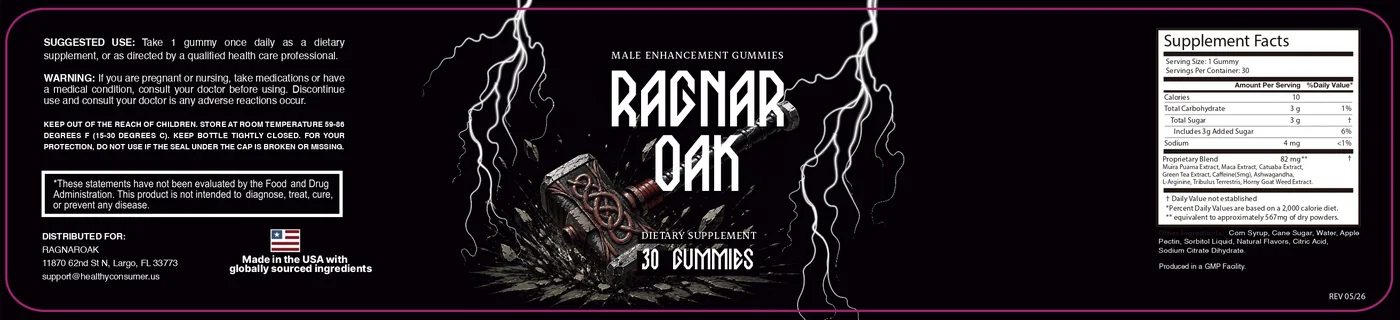
There is a critical distinction hiding in the word “standardized.” A label can list ashwagandha two very different ways: as a concentrated extract standardized to a set percentage of withanolides (its active compounds), or as raw root powder, which is far weaker gram for gram. Three hundred milligrams of standardized KSM-66 is not the same as 300 mg of plain powder — it can represent the equivalent of several grams of root. When you compare products, the number that matters is milligrams of standardized extract per serving. A big-sounding raw-powder figure can deliver less active than a smaller extract figure. This is exactly the kind of dose arithmetic we do on every product, including in our line-by-line look at the 82 mg blend spread across nine ingredients.
How it works: the cortisol route, not a testosterone switch
The mechanism matters because it explains the timeline. Ashwagandha does not appear to act like a hormone that flips testosterone up on contact. The more supported story is indirect: it helps lower cortisol, the body's chief stress hormone, and cortisol and testosterone tend to move in opposition — chronically high cortisol suppresses testosterone. By easing that stress load over weeks, ashwagandha may allow testosterone to sit a little higher than it did under sustained stress. Better sleep, which some users report, reinforces the same loop, because most testosterone is produced during sleep.
Read that way, ashwagandha is really a stress-and-recovery ingredient with a testosterone-adjacent side effect, and that framing keeps expectations honest. It is doing something similar to the cortisol-control lever we cover among the natural ways to increase testosterone — which is also why it stacks logically with, rather than replaces, good sleep and sensible training. If your stress is already low and your sleep is already excellent, you have less room for ashwagandha to help; if you are frazzled and under-slept, there is more.
The timeline: think in 8 to 12 week blocks, and give it 90 days
Because the effect works by re-settling a system rather than switching a receptor, the timeline is measured in weeks. Most ashwagandha trials run for 8 to 12 weeks of continuous daily use and take their key measurements at the end, and it is common for the outcomes — lower cortisol, higher testosterone, reduced stress scores — to be reported only at that 8-to-12-week mark. That is why a fair personal trial is a full 90 days: not because something magic happens on day 90, but because that is the window in which the research actually observed its results.
What this means for you is practical. Do not judge ashwagandha in the first week; on any given day you are mostly measuring your sleep, your stress and your expectations, not the ingredient. Take it at the same time each day, keep the rest of your routine reasonably stable so you can read the result, and set a review date about twelve weeks out. If you are the kind of person who abandons a supplement after ten days because “nothing happened,” ashwagandha is not for you — it never had a chance to work on that clock.
A 90-day supply for a 90-day question
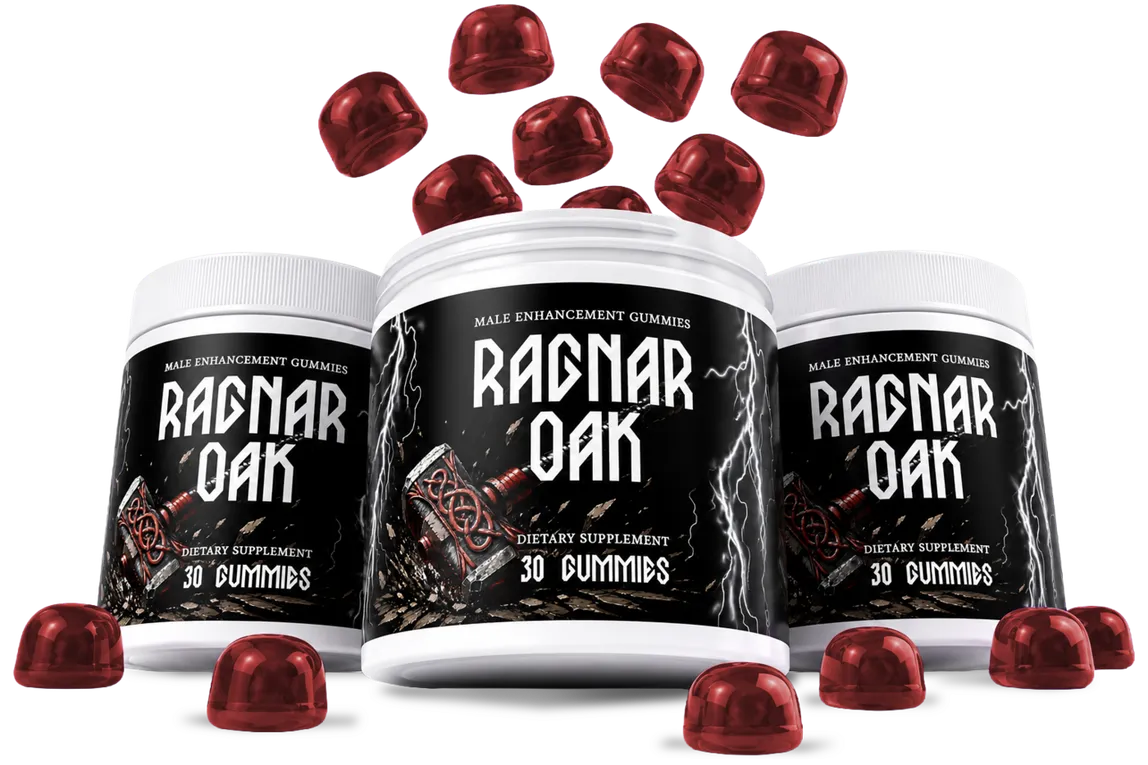
If you want to run ashwagandha the way the research does — daily, over a full three-month window — a three-jar supply covers exactly that. The official store lists the RagnarOak panel so you can check the per-serving figures against the doses above before you commit.
See RagnarOak at the Official StoreMorning or night? Timing, split doses and food
The honest answer is that timing is a minor variable and consistency is the major one. If you take a single daily dose, morning is easiest to remember and pairs naturally with a routine. If you follow the split-dose approach many studies used — 300 mg morning, 300 mg evening — you keep levels steadier across the day, which is a reasonable argument for splitting when the product allows it.
There is one genuine reason some men prefer the evening: ashwagandha's calming, cortisol-lowering profile can support sleep, and since sleep itself supports testosterone, an evening dose can be a small two-for-one. Taking it with food is sensible too, as it reduces the chance of the mild stomach upset a few people report on an empty stomach. None of these tweaks will rescue an inadequate dose, though — timing optimizes a studied amount; it does not substitute for one.
The most common way to be disappointed by ashwagandha is not bad timing or the wrong time of day — it is taking a fraction of the studied dose and expecting the studied result.
The gummy problem: check total ashwagandha per serving
Here is where shopping gets tripped up. Ashwagandha in gummy form can absolutely work — but only if the gummy actually delivers something close to the studied 300 to 600 mg of standardized extract, and that is where the format fights back. A gummy has a hard physical ceiling on how much active it can carry per piece before it stops setting properly or turns unpalatable, and in a multi-ingredient men's blend the ashwagandha is not the only passenger — it shares space with eight other botanicals inside a single small dose. Divide a shared 82 mg blend across nine ingredients and the ashwagandha portion lands well below the trial range. We walk through exactly why that ceiling exists in our piece on the gummy dose ceiling and what pectin and sugar leave room for.
This is not an argument that gummies are useless or that RagnarOak is misrepresenting anything — the label prints its figures, which is exactly what lets you do this math. It is an argument for reading the number. Before you buy any ashwagandha product, capsule or gummy, single-ingredient or blend, find the milligrams of standardized extract per serving and compare it against 300 to 600 mg. If a product does not disclose the amount, or buries it inside a proprietary blend total, treat that as the answer.
Ashwagandha for testosterone: the numbers that matter
| Variable | What the research uses | Why it matters |
|---|---|---|
| Daily dose | 300–600 mg standardized root extract | Below this band, effects are unlikely |
| Form | Standardized extract (e.g. KSM-66), not raw powder | Extract is far stronger gram for gram |
| Split | Often 300 mg twice daily | Steadier levels; mirrors many trials |
| Duration | 8–12 weeks; 90-day run recommended | Outcomes are measured at the end, not day one |
| Mechanism | Lowers cortisol; T change is indirect | Explains the slow, gradual timeline |
| In a blend | Check the per-serving ashwagandha figure | Shared blends often fall short of the dose |
Three objections, answered honestly
“Won't a higher dose work faster?” Not reliably. The evidence clusters at 300 to 600 mg, and pushing far past that is not shown to speed anything up — it mostly raises the chance of side effects like drowsiness or stomach upset. Match the studied dose; do not chase it.
“I felt nothing in two weeks, so it doesn't work.” Two weeks is not the test. The trials read out at 8 to 12 weeks precisely because the cortisol-mediated effect accumulates. Judging early is judging your sleep and stress, not the ingredient.
“It's natural, so I can ignore the cautions.” Natural does not mean consequence-free. Ashwagandha is generally well tolerated, but it can interact with thyroid, sedative and immune-modulating medications, and it is not recommended in pregnancy. If you take medication or have a thyroid or autoimmune condition, clear it with your doctor first.
What this cannot do, stated plainly
Ashwagandha is a dietary supplement ingredient, and RagnarOak is a dietary supplement. Neither is intended to diagnose, treat, cure or prevent any disease, and nothing here should be read as claiming ashwagandha treats low testosterone. If a blood test shows genuinely low testosterone, that is a medical condition that deserves a doctor's assessment — there are treatments for it, and a botanical is not one of them. Ashwagandha's honest lane is support: a well-tolerated daily adaptogen that, at a studied dose over a studied timeline, may help with stress, sleep and, in some men, modest testosterone-adjacent changes.
Set against that, the finished-product reality is worth repeating. There is no published trial on the RagnarOak gummy itself, and inside a shared 82 mg blend the ashwagandha share sits below the studied 300-to-600 mg range. That does not make the ingredient a bad one — it makes the dose the thing to scrutinize. Buy for the number on the panel, run it for a fair 90 days, and set your expectations to “modest support,” not “testosterone therapy.”
Medical note: ashwagandha can interact with thyroid, sedative and immune-suppressing medications and is not advised in pregnancy. If you take medication or manage a health condition, talk to your doctor before starting it.
Related reading
Frequently asked questions
How much ashwagandha per day for testosterone?
The trials that report testosterone-adjacent effects generally use 300 to 600 mg per day of a standardized root extract such as KSM-66, most often split as 300 mg taken twice daily. Higher is not automatically better; that band is where the human evidence sits. The number that actually matters on any product is the standardized extract per serving, not the raw powder weight, so read the panel before comparing.
How long does ashwagandha take to affect testosterone?
Plan on weeks, not days. Most ashwagandha trials run 8 to 12 weeks of continuous daily use and measure their outcomes at the end of that window, and many practitioners suggest a full 90-day run before judging results. Because much of the effect appears to work through gradually lowering cortisol, it builds over time rather than switching on after a single dose.
Should ashwagandha be taken morning or night?
Either works, and consistency matters more than the clock. Splitting the dose — for example 300 mg in the morning and 300 mg in the evening — mirrors how many studies dosed it and keeps levels steadier. Some people find the evening dose supports sleep, which is useful because better sleep itself supports testosterone. Taking it with food can reduce the chance of mild stomach upset.
Does ashwagandha work in gummy form?
Only if the gummy delivers a studied amount, and that is the catch. Gummies have a hard ceiling on how much active they can carry per piece, and in a multi-ingredient blend the ashwagandha share is often far below the 300 to 600 mg used in trials. The format is not the problem in principle — the total standardized dose per serving is. Always check the label figure rather than assuming.
Scientific references
- NIH National Center for Complementary and Integrative Health — Ashwagandha
- NIH Office of Dietary Supplements — Dietary Supplements: What You Need to Know
- Mayo Clinic — Ashwagandha: Is it helpful?
- PubMed — literature search: ashwagandha, testosterone, randomized controlled trials
- PubMed — literature search: ashwagandha, cortisol and stress
Check the dose, then decide
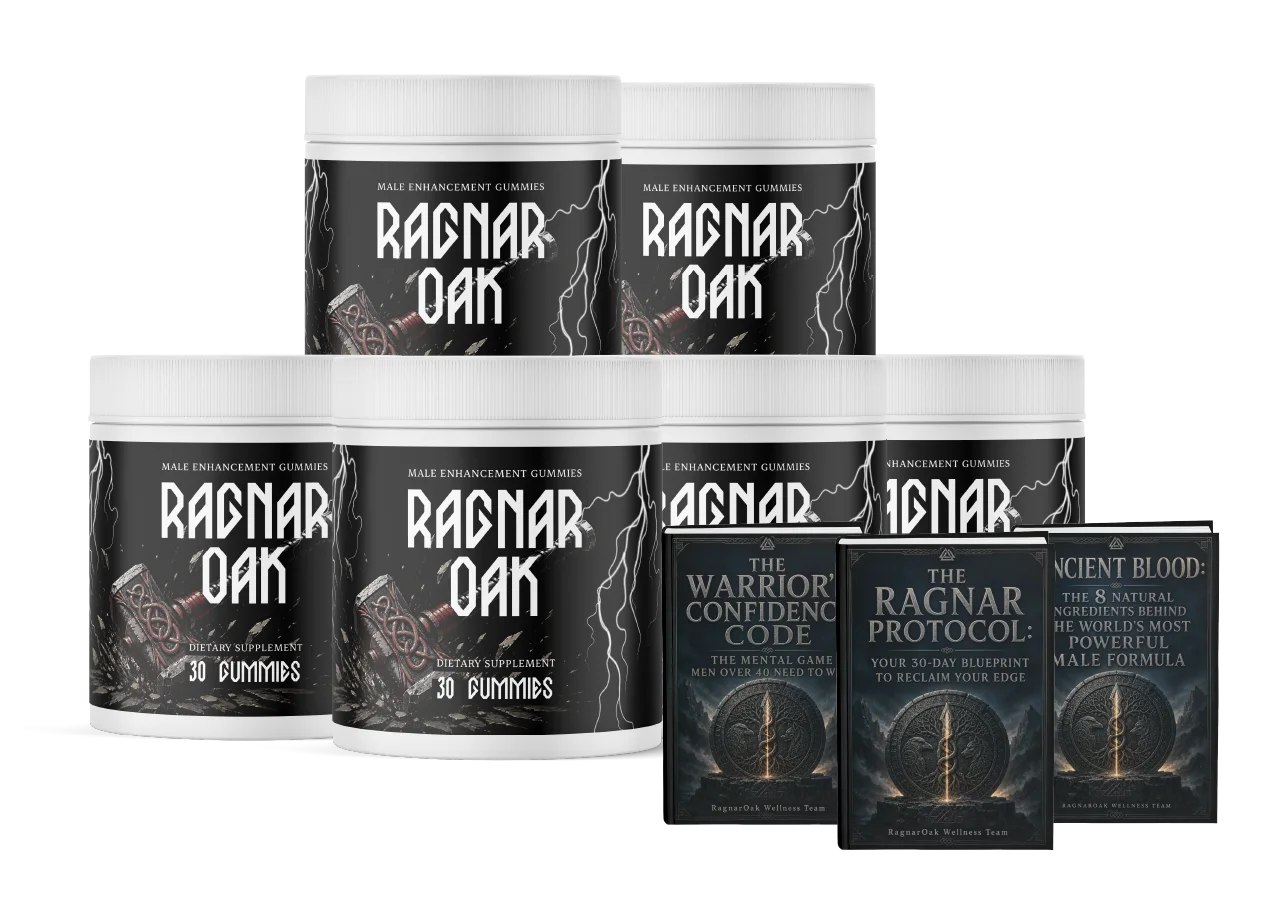
If you want to run ashwagandha over a proper 8-to-12-week window as part of a daily men's routine, the official store lists the full RagnarOak panel, the 60-day guarantee terms and where to buy it directly — so you can weigh the per-serving figures against the studied dose yourself.
Check Availability at the Official Store